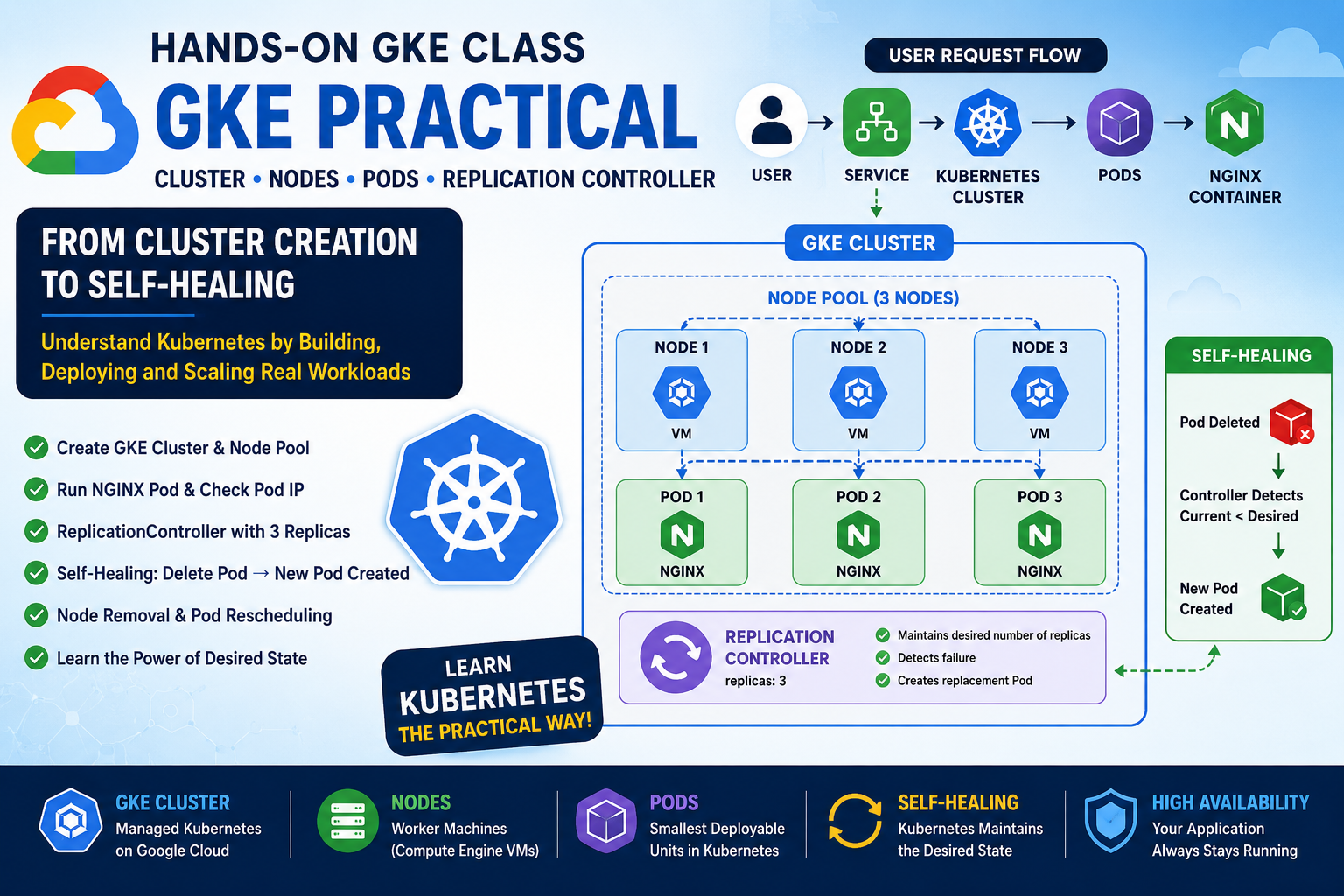
Google Kubernetes Engine (GKE) provides a managed Kubernetes environment on Google Cloud. In this hands-on class, I created a GKE Standard cluster, explored its nodes and underlying Compute Engine VMs, deployed an NGINX Pod, created a ReplicationController, tested self-healing, and finally simulated node removal. This practical exercise helped me understand an important Kubernetes principle: Kubernetes continuously works to maintain the desired state of our applications. 1. What is a Kubernetes
Year: 2026
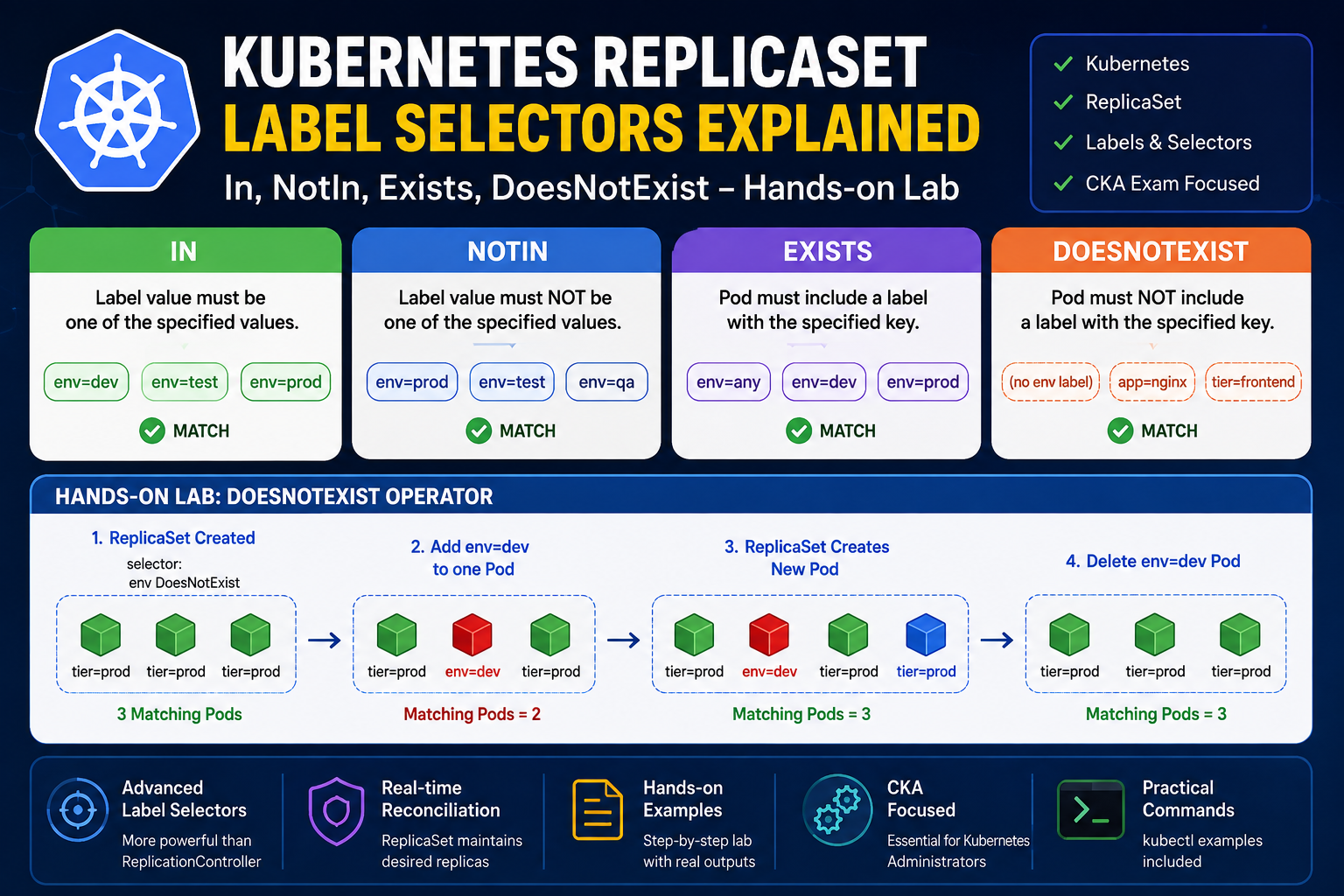
Category: Kubernetes, CKA, ReplicaSet, Labels, Selectors Introduction One of the biggest improvements of ReplicaSet over the old ReplicationController is its more expressive label selectors. ReplicationController supports only simple equality-based selectors such as: ReplicaSet introduces set-based selectors, allowing you to create much more flexible selection rules using matchExpressions. In this hands-on lab, we’ll explore all four ReplicaSet selector operators: We’ll also verify each operator by changing Pod labels and observing ReplicaSet’s
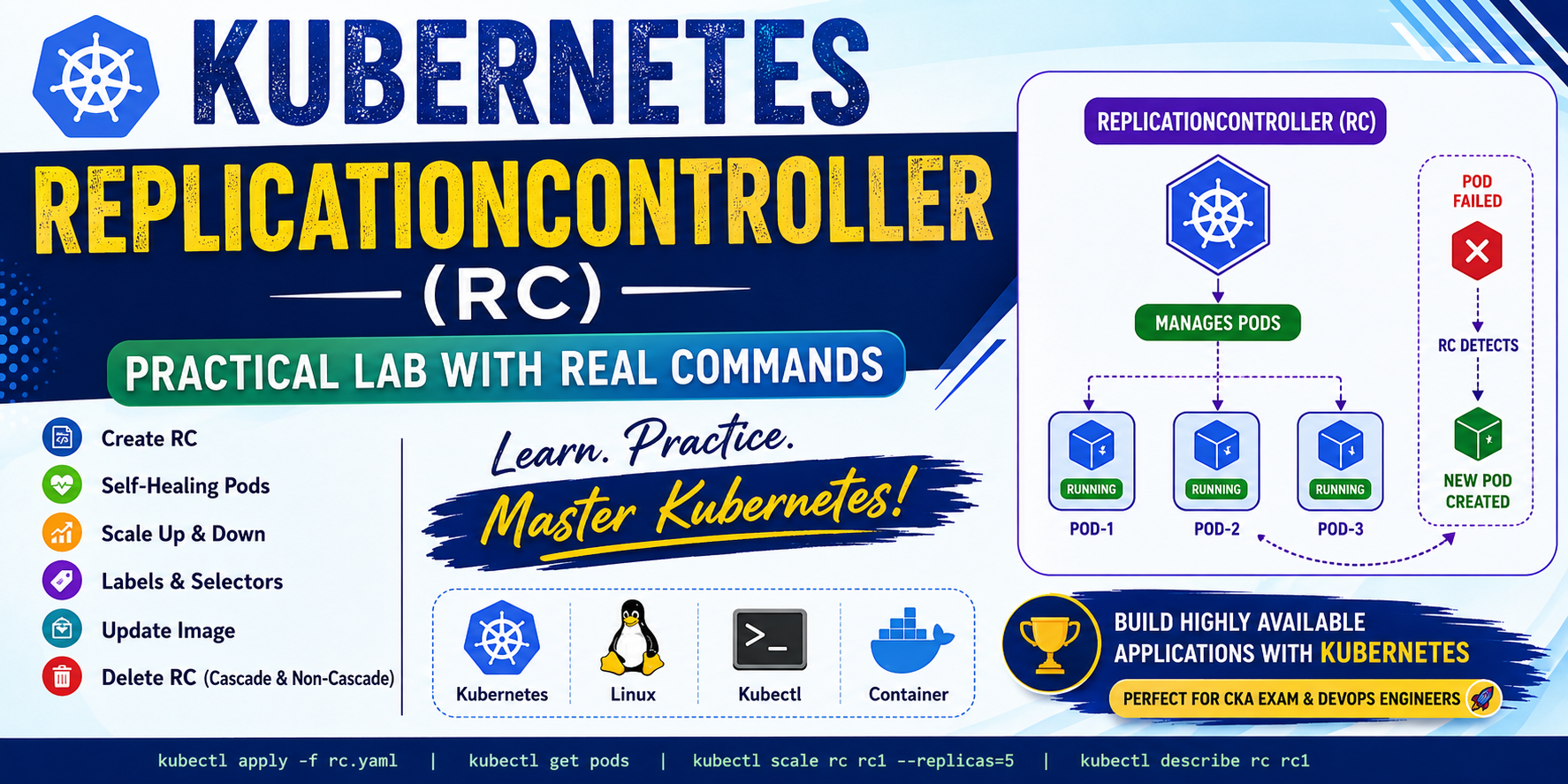
In this blog, I will demonstrate: What is ReplicationController? A ReplicationController (RC) ensures that a specified number of Pod replicas are always running. If a Pod crashes or is deleted accidentally, Kubernetes automatically creates another Pod. Responsibilities Lab-1: Create a Single Pod Create an nginx Pod. Output Check the Pod. Output Delete the Pod Output Check again. Output Notice that Kubernetes does not recreate the Pod because it is an
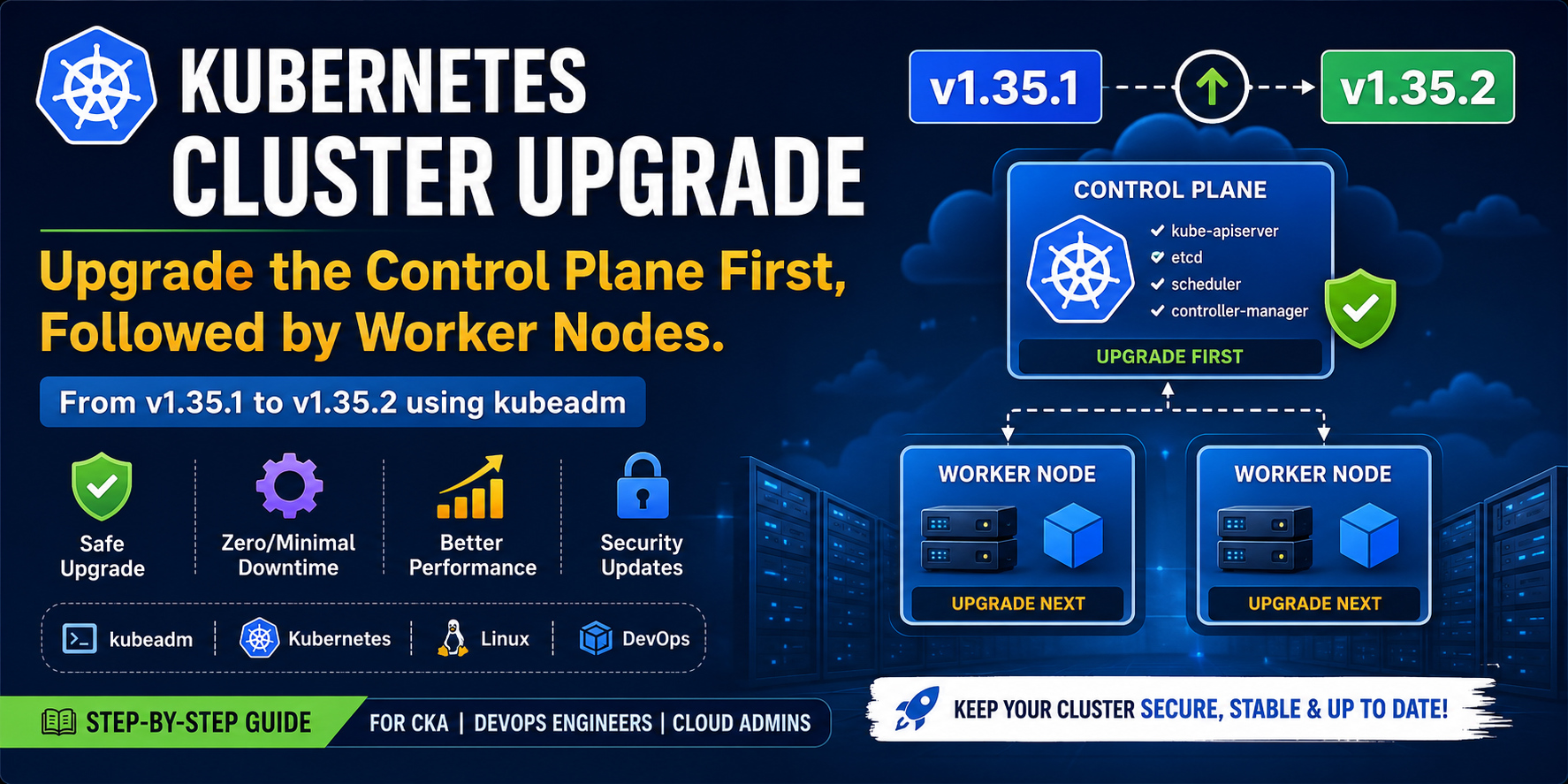
A Kubernetes cluster consists of two main components: The recommended upgrade order is: In this tutorial, we will upgrade a Kubernetes cluster from v1.35.1 to v1.35.2 using kubeadm. Kubernetes Cluster Architecture Prerequisites Before starting the upgrade, ensure that: Current Cluster Version Example Output Part 1 — Upgrading the Control Plane The Control Plane manages the Kubernetes cluster. It is responsible for scheduling Pods, maintaining cluster state, handling API requests, and
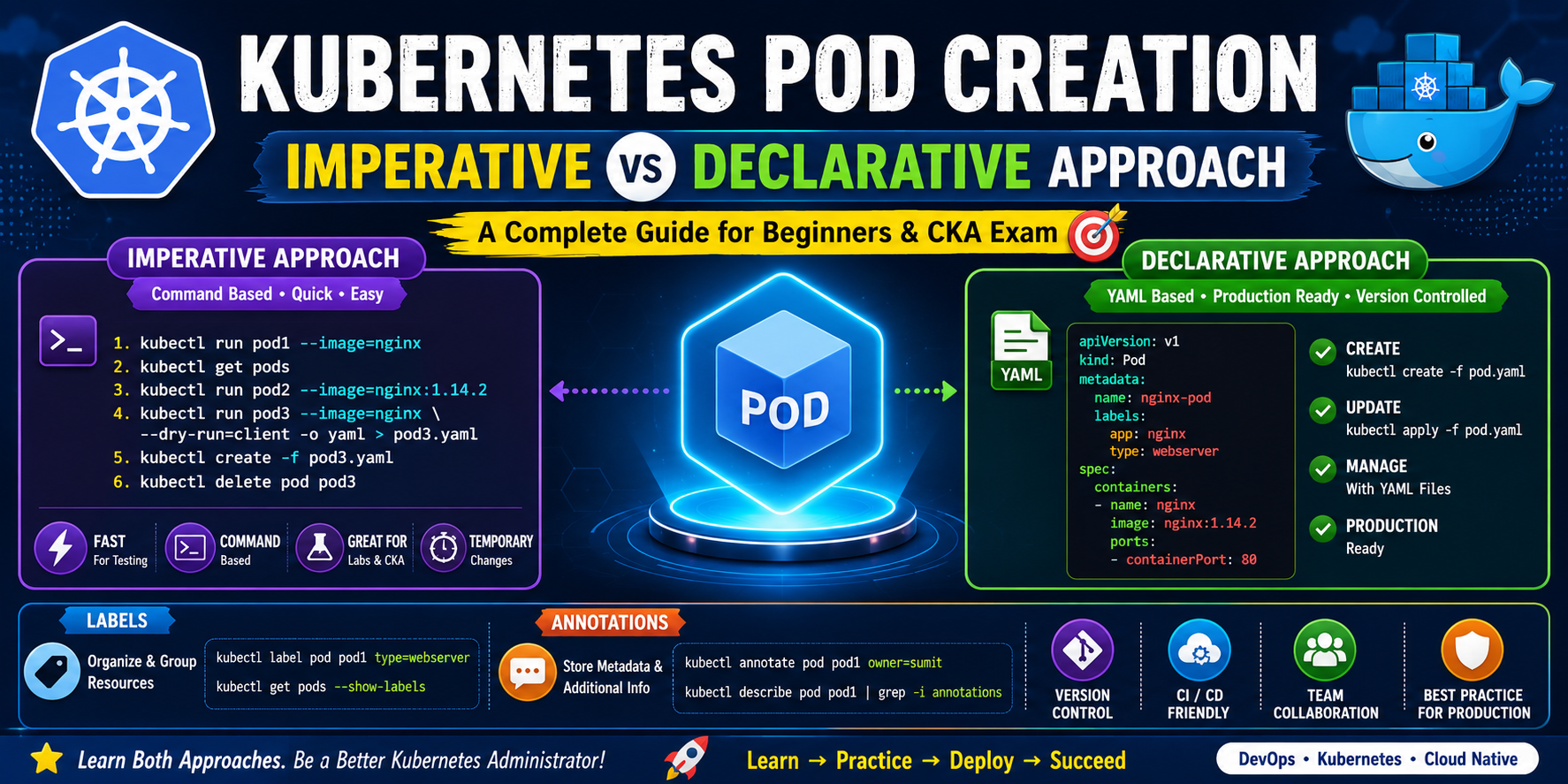
Level: Beginner → IntermediateCategory: Kubernetes | DevOps | CKA | DockerAuthor: Sumit Bera 📚 Introduction Kubernetes is an open-source container orchestration platform that automates the deployment, scaling, and management of containerized applications. Before learning Deployments, Services, ReplicaSets, or Ingress, you should first understand Pods, because every application in Kubernetes runs inside a Pod. There are two methods to create Kubernetes resources: Every Kubernetes Administrator should know both methods because they
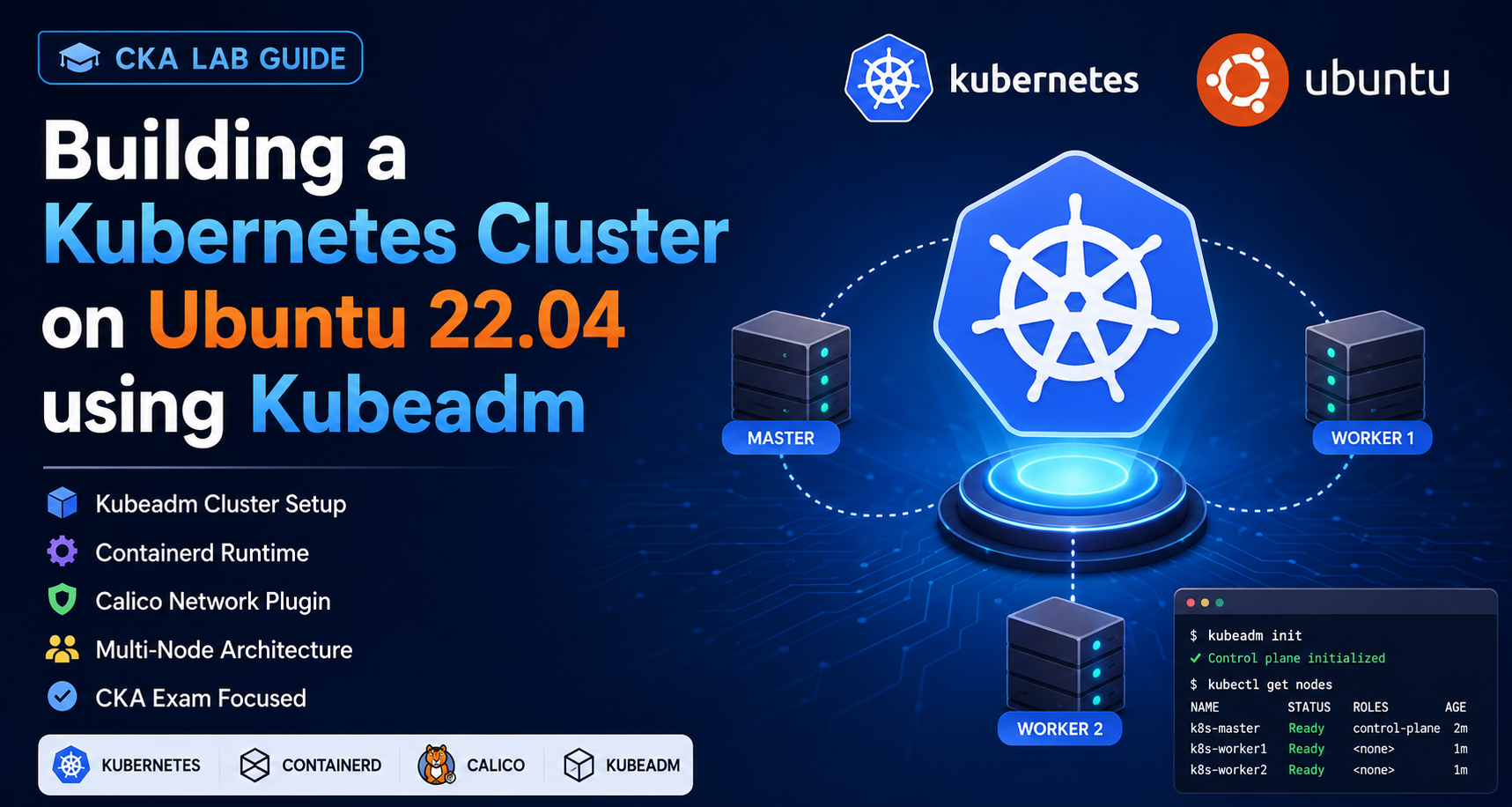
🌐 Introduction Kubernetes is the most popular container orchestration platform used by companies worldwide. As a CKA (Certified Kubernetes Administrator) candidate, one of the most important skills is building a Kubernetes cluster from scratch. In this lab, we will: ✅ Create a Kubernetes Cluster using Kubeadm✅ Install Containerd Runtime✅ Configure Kernel Modules✅ Install Kubernetes Components✅ Deploy Calico Network Plugin✅ Join Worker Nodes✅ Verify Cluster Health ☁️ Step 1: Create a