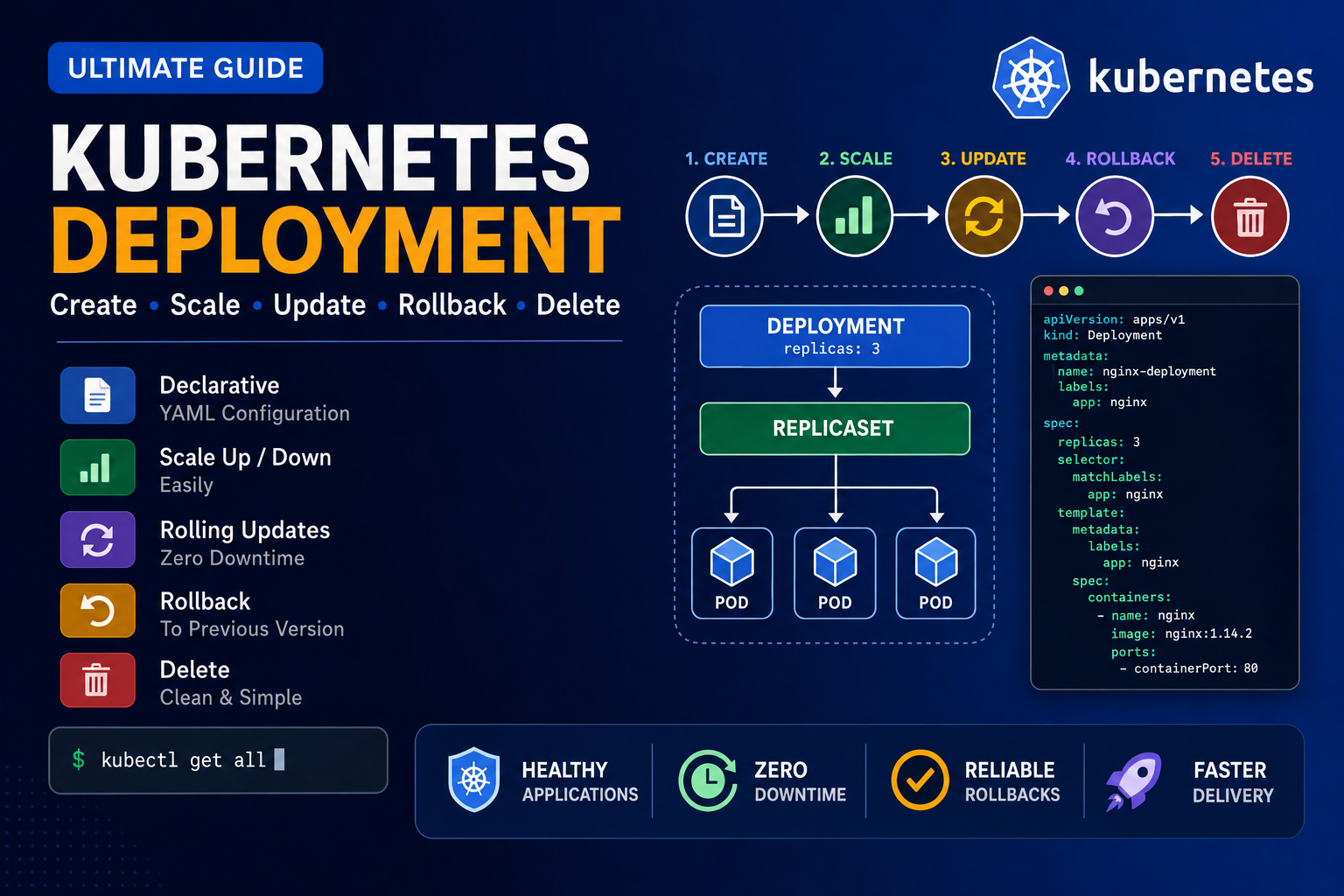
Below is the clean and correct command sequence for practicing Kubernetes Deployment, Scaling, Rolling Update, Rollout History, and Rollback. 1. Create a Deployment YAML file Use this YAML: Save and exit: 2. Create the Deployment Check the Deployment: Watch the Deployment: Press: to stop watching. 3. Check all resources Check Pods: Check ReplicaSets: 4. Learn kubectl create deployment Display help: Create another Deployment: Check all Deployments: Check only app1: 5.
Tag: CKA
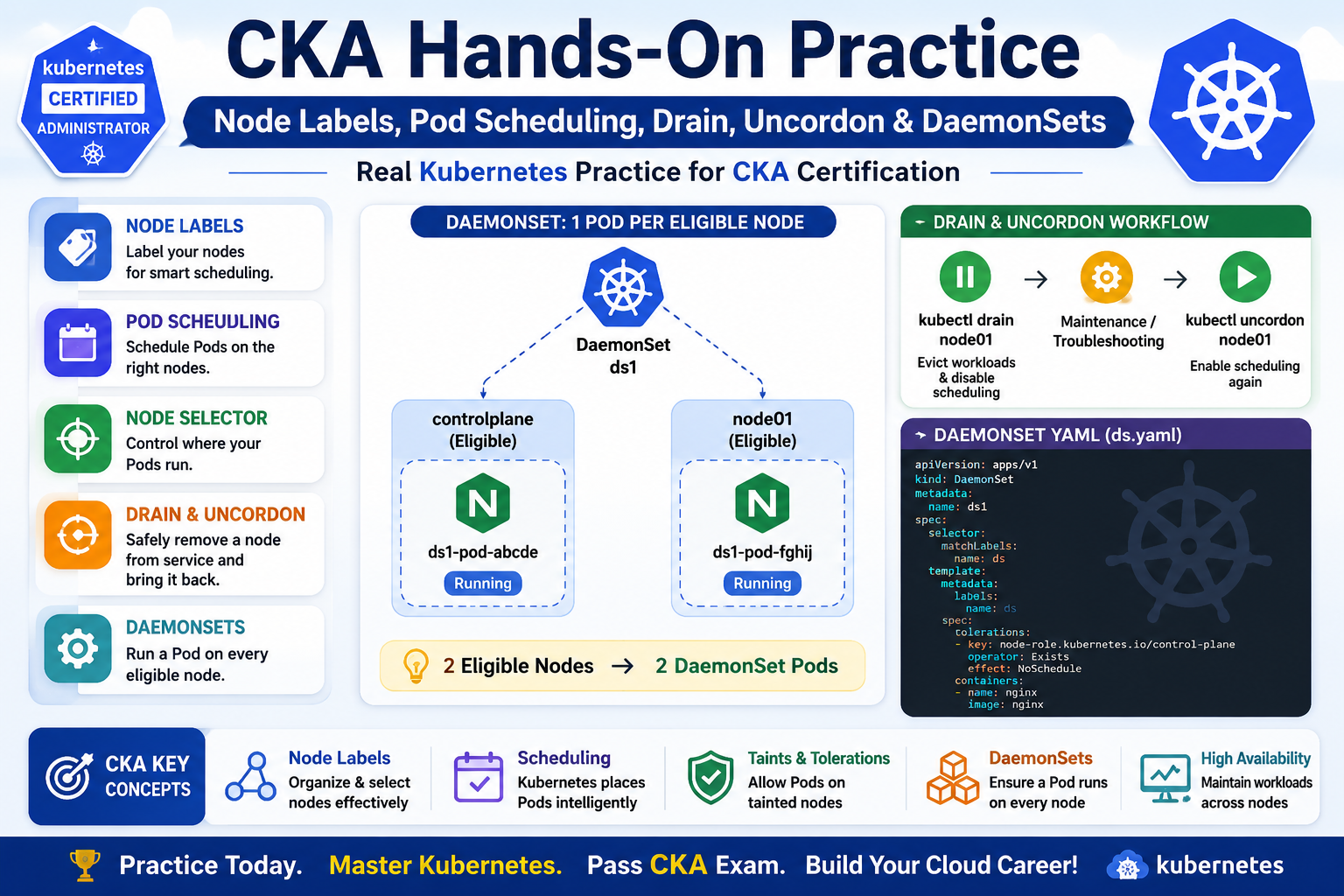
The main topics I practiced were: 1. Checking Kubernetes Nodes I started by checking the nodes in the cluster: kubectl get nodes Example: NAME STATUS ROLES VERSIONcontrolplane Ready control-plane v1.35.1node01 Ready <none> v1.35.1 My practice cluster contains two nodes: controlplanenode01 Both nodes were in the Ready state. 2. Working with Node Labels Next, I practiced Kubernetes node labels. First, I checked the existing labels: kubectl get nodes –show-labels Then I
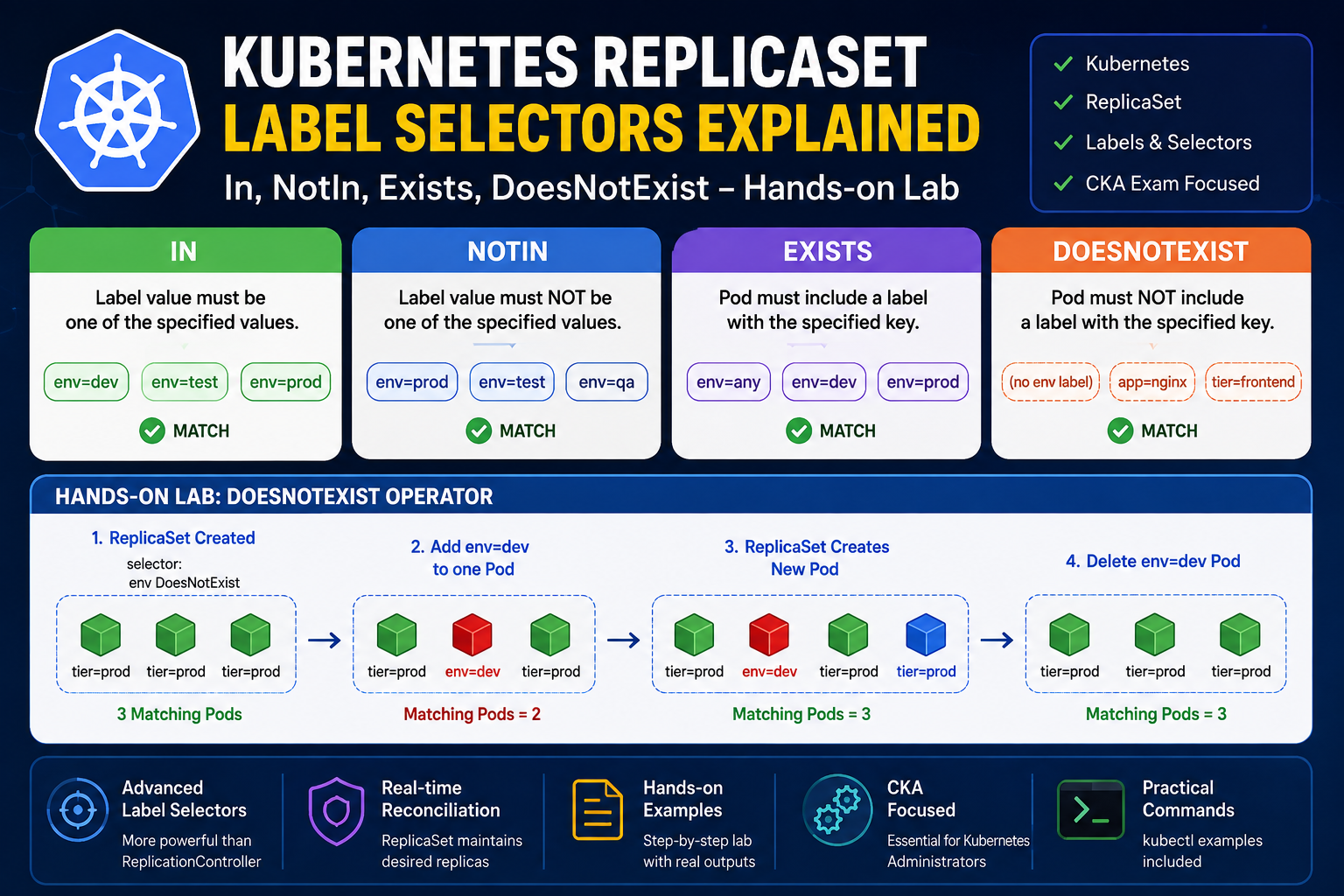
Category: Kubernetes, CKA, ReplicaSet, Labels, Selectors Introduction One of the biggest improvements of ReplicaSet over the old ReplicationController is its more expressive label selectors. ReplicationController supports only simple equality-based selectors such as: ReplicaSet introduces set-based selectors, allowing you to create much more flexible selection rules using matchExpressions. In this hands-on lab, we’ll explore all four ReplicaSet selector operators: We’ll also verify each operator by changing Pod labels and observing ReplicaSet’s
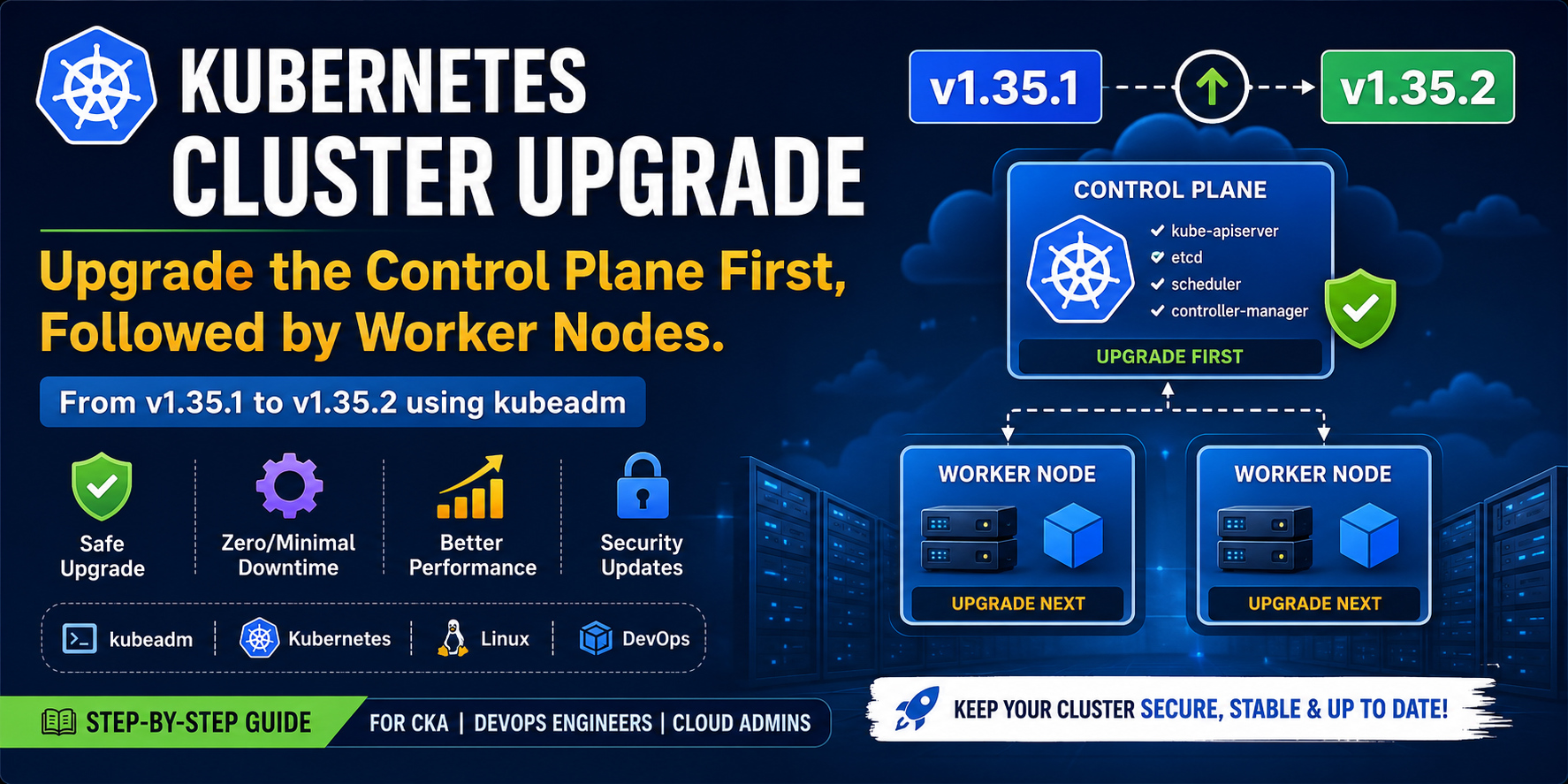
A Kubernetes cluster consists of two main components: The recommended upgrade order is: In this tutorial, we will upgrade a Kubernetes cluster from v1.35.1 to v1.35.2 using kubeadm. Kubernetes Cluster Architecture Prerequisites Before starting the upgrade, ensure that: Current Cluster Version Example Output Part 1 — Upgrading the Control Plane The Control Plane manages the Kubernetes cluster. It is responsible for scheduling Pods, maintaining cluster state, handling API requests, and
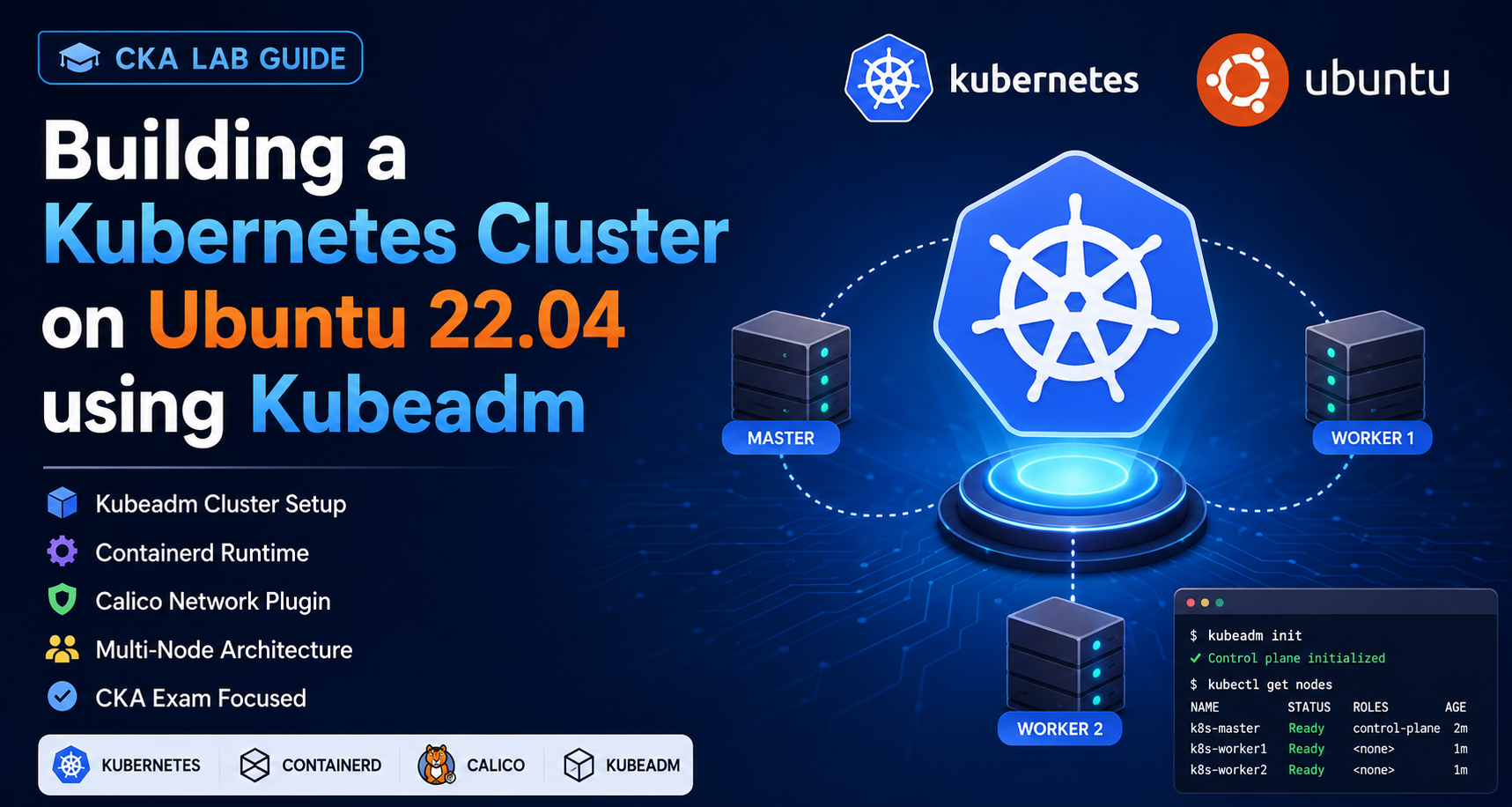
🌐 Introduction Kubernetes is the most popular container orchestration platform used by companies worldwide. As a CKA (Certified Kubernetes Administrator) candidate, one of the most important skills is building a Kubernetes cluster from scratch. In this lab, we will: ✅ Create a Kubernetes Cluster using Kubeadm✅ Install Containerd Runtime✅ Configure Kernel Modules✅ Install Kubernetes Components✅ Deploy Calico Network Plugin✅ Join Worker Nodes✅ Verify Cluster Health ☁️ Step 1: Create a