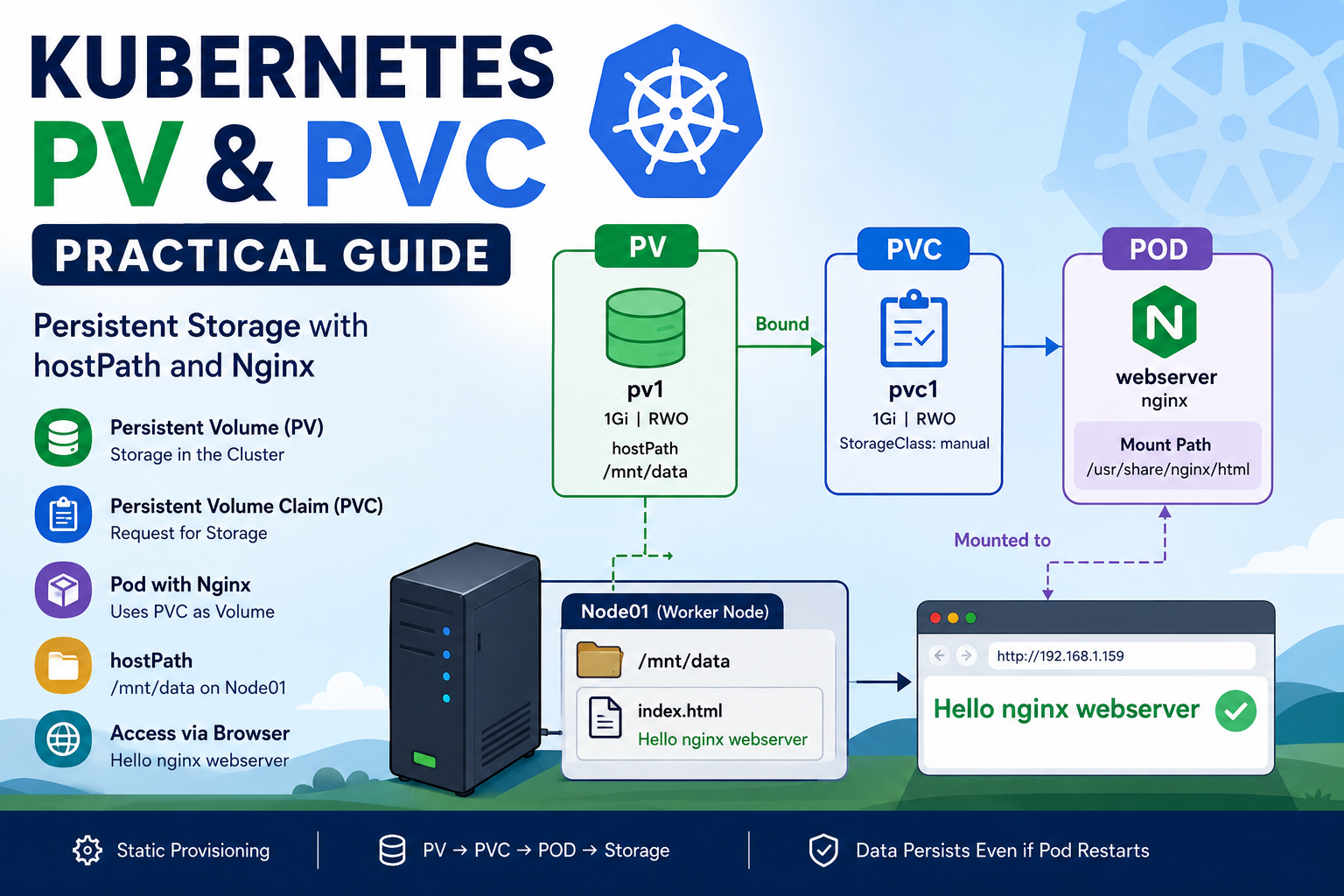
Kubernetes applications often need persistent storage to keep data even when containers restart or are recreated. Kubernetes provides Persistent Volumes (PV) and Persistent Volume Claims (PVC) to manage this storage. In this practical lab, we will create a PersistentVolume, create a PersistentVolumeClaim, attach the PVC to an Nginx Pod, and use a node’s /mnt/data directory as persistent storage through hostPath. What You Will Learn In this practical, we will understand:
Tag: linux
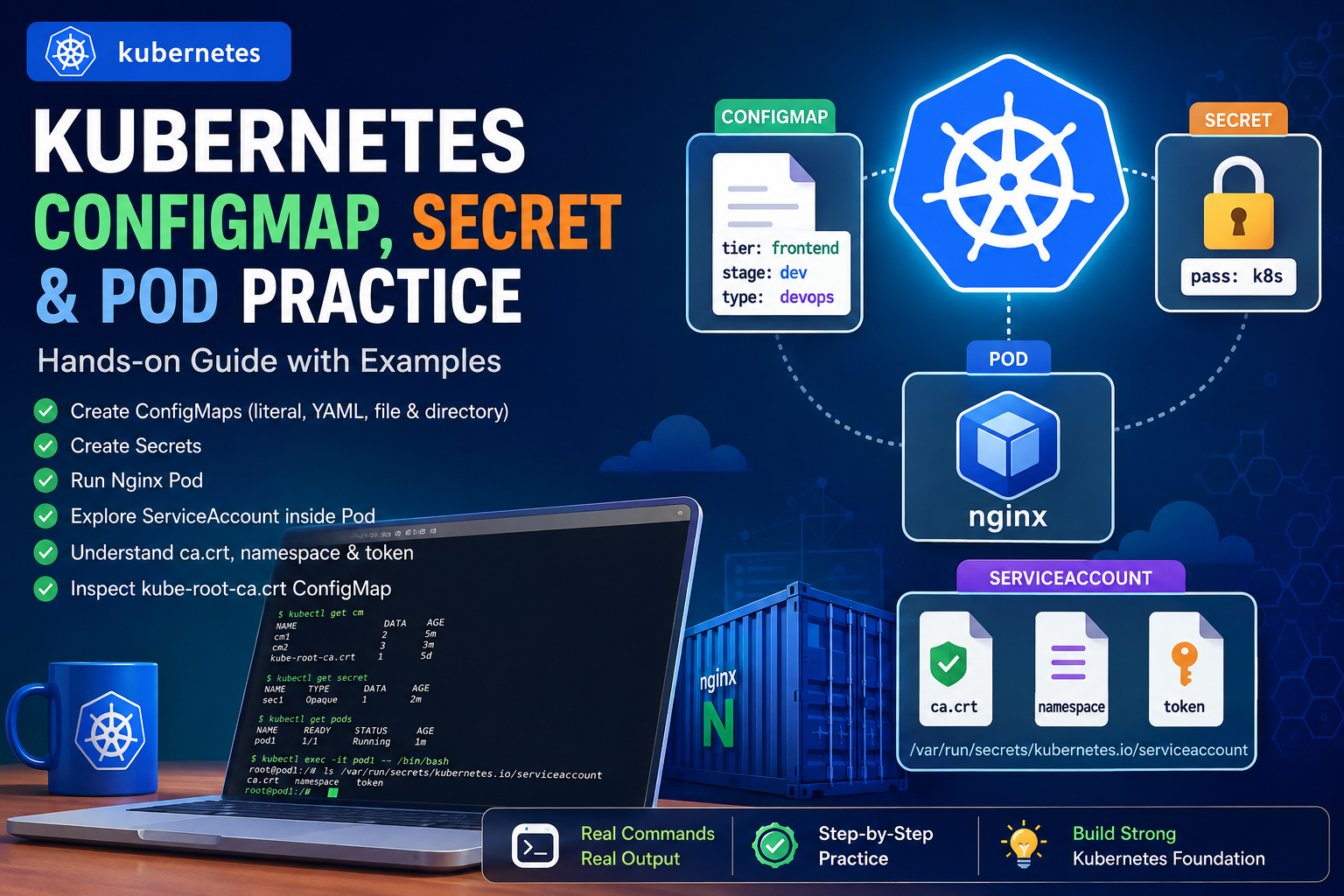
Kubernetes provides several powerful mechanisms for managing application configuration, sensitive information, containers, and access to the Kubernetes API. In this hands-on practice, I worked through: This article documents the complete workflow step by step. 1. Checking Existing ConfigMaps I started by checking the ConfigMaps already available in the namespace. Flow A ConfigMap is used to store non-sensitive configuration data separately from application code. 2. Creating a ConfigMap with Literal Values
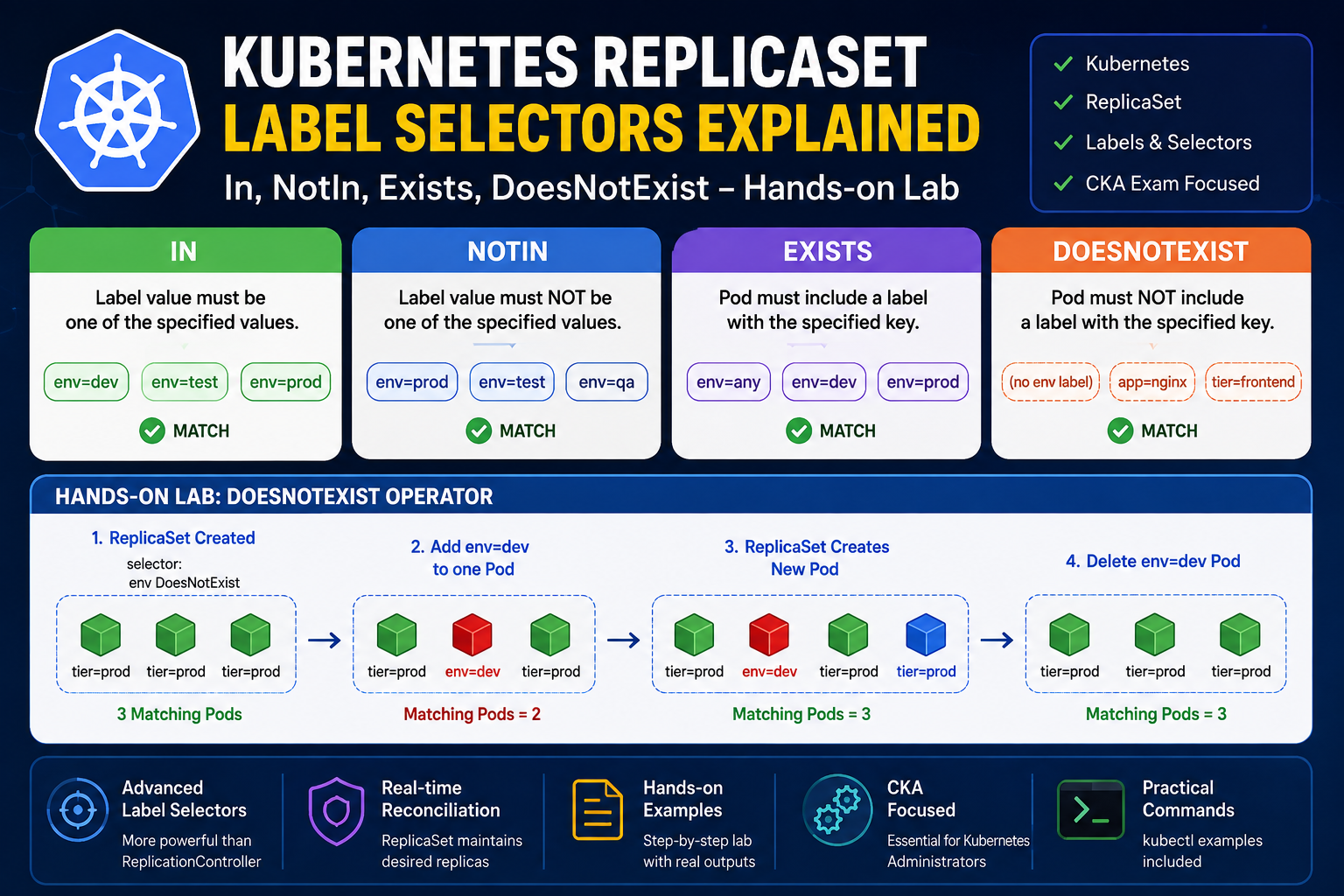
Category: Kubernetes, CKA, ReplicaSet, Labels, Selectors Introduction One of the biggest improvements of ReplicaSet over the old ReplicationController is its more expressive label selectors. ReplicationController supports only simple equality-based selectors such as: ReplicaSet introduces set-based selectors, allowing you to create much more flexible selection rules using matchExpressions. In this hands-on lab, we’ll explore all four ReplicaSet selector operators: We’ll also verify each operator by changing Pod labels and observing ReplicaSet’s
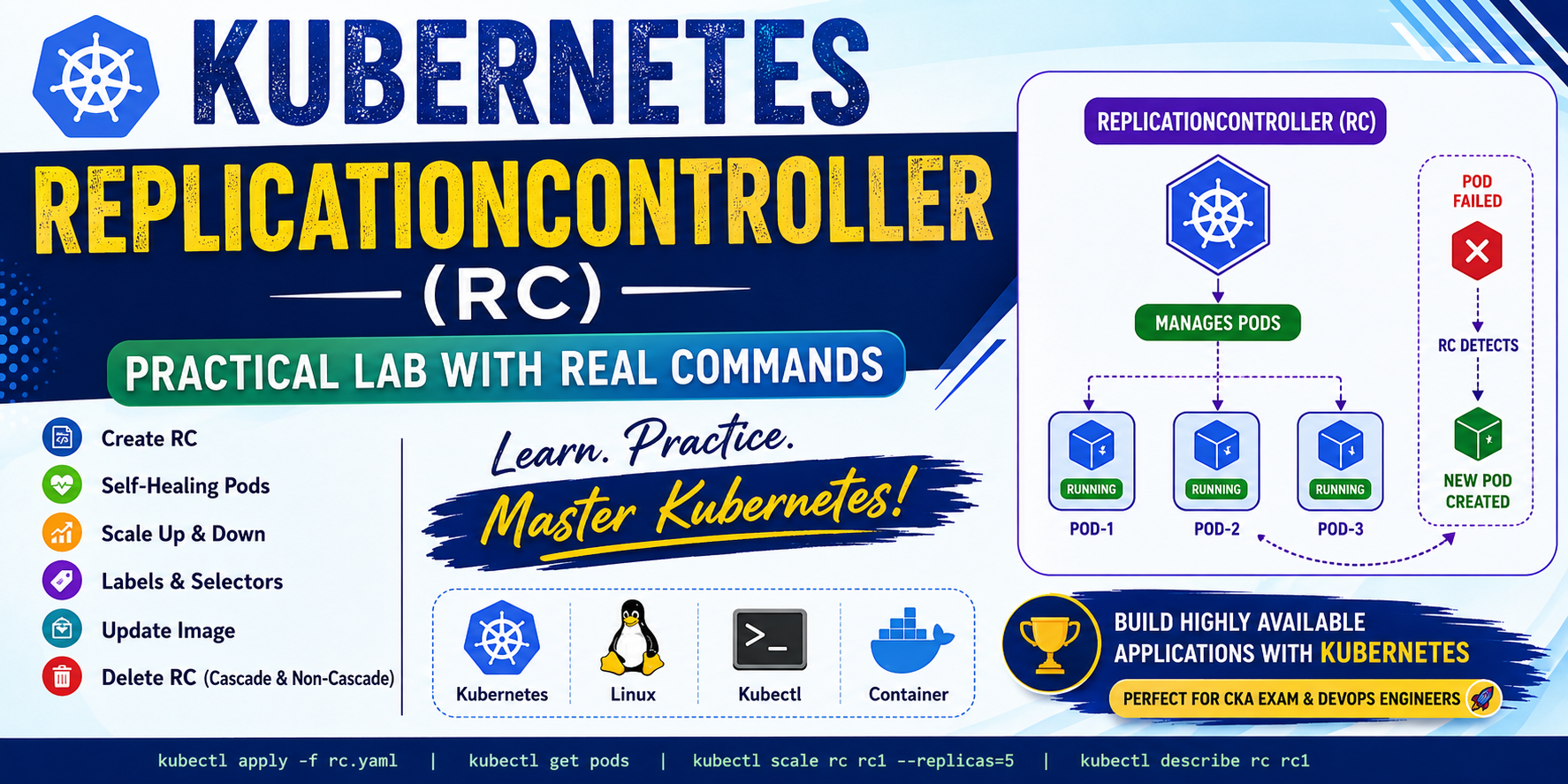
In this blog, I will demonstrate: What is ReplicationController? A ReplicationController (RC) ensures that a specified number of Pod replicas are always running. If a Pod crashes or is deleted accidentally, Kubernetes automatically creates another Pod. Responsibilities Lab-1: Create a Single Pod Create an nginx Pod. Output Check the Pod. Output Delete the Pod Output Check again. Output Notice that Kubernetes does not recreate the Pod because it is an
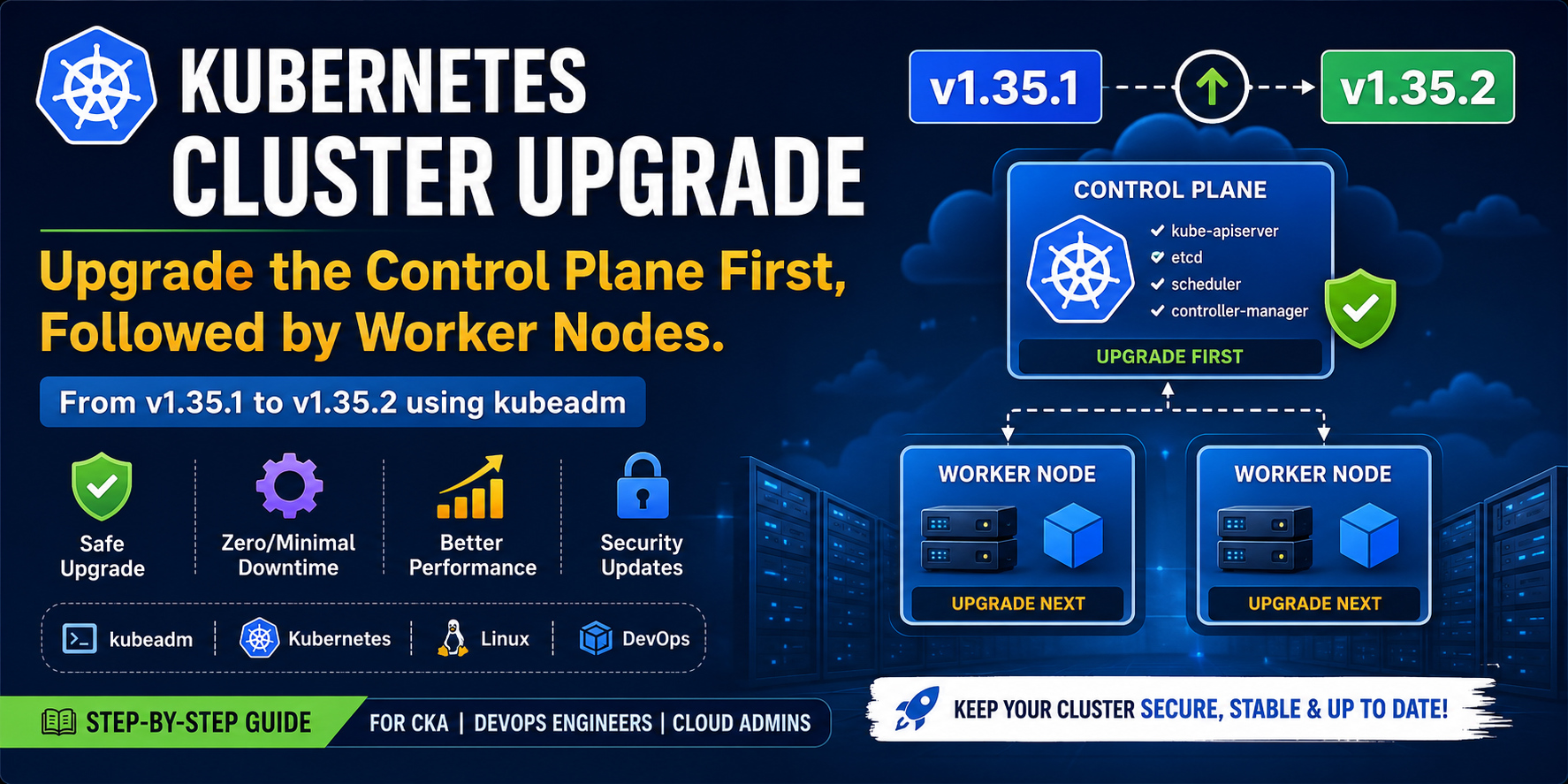
A Kubernetes cluster consists of two main components: The recommended upgrade order is: In this tutorial, we will upgrade a Kubernetes cluster from v1.35.1 to v1.35.2 using kubeadm. Kubernetes Cluster Architecture Prerequisites Before starting the upgrade, ensure that: Current Cluster Version Example Output Part 1 — Upgrading the Control Plane The Control Plane manages the Kubernetes cluster. It is responsible for scheduling Pods, maintaining cluster state, handling API requests, and
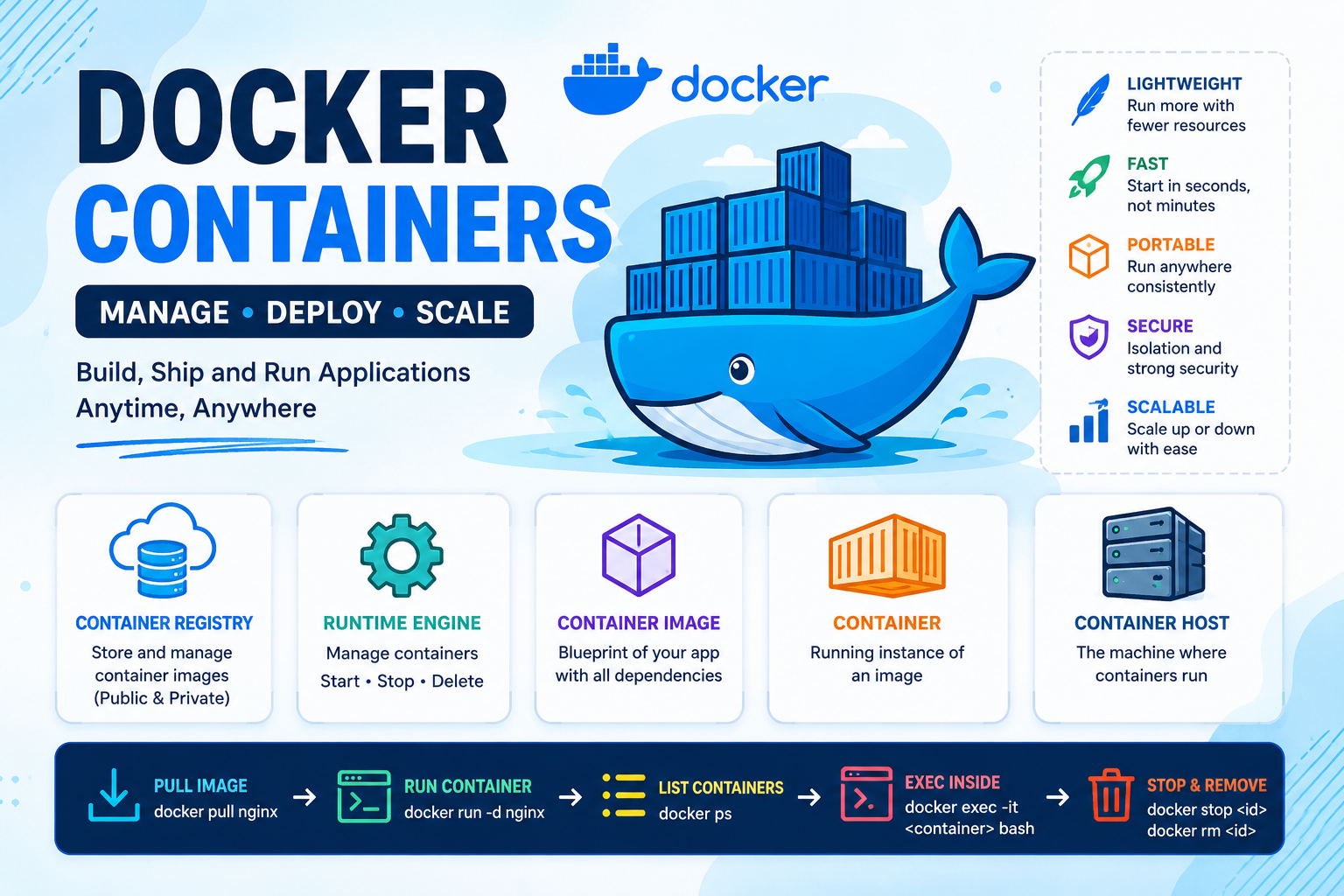
A Beginner-Friendly Guide to Docker Containers on AWS EC2 In today’s cloud-native world, Docker Containers have completely changed the way applications are developed, deployed, and managed. Containers are lightweight, fast, portable, and incredibly efficient compared to traditional virtual machines. In this blog, we will learn: ✨ What Docker is✨ Important Container Terminologies✨ How to Install Docker on AWS EC2✨ How to Run and Manage Containers✨ How to Launch an NGINX