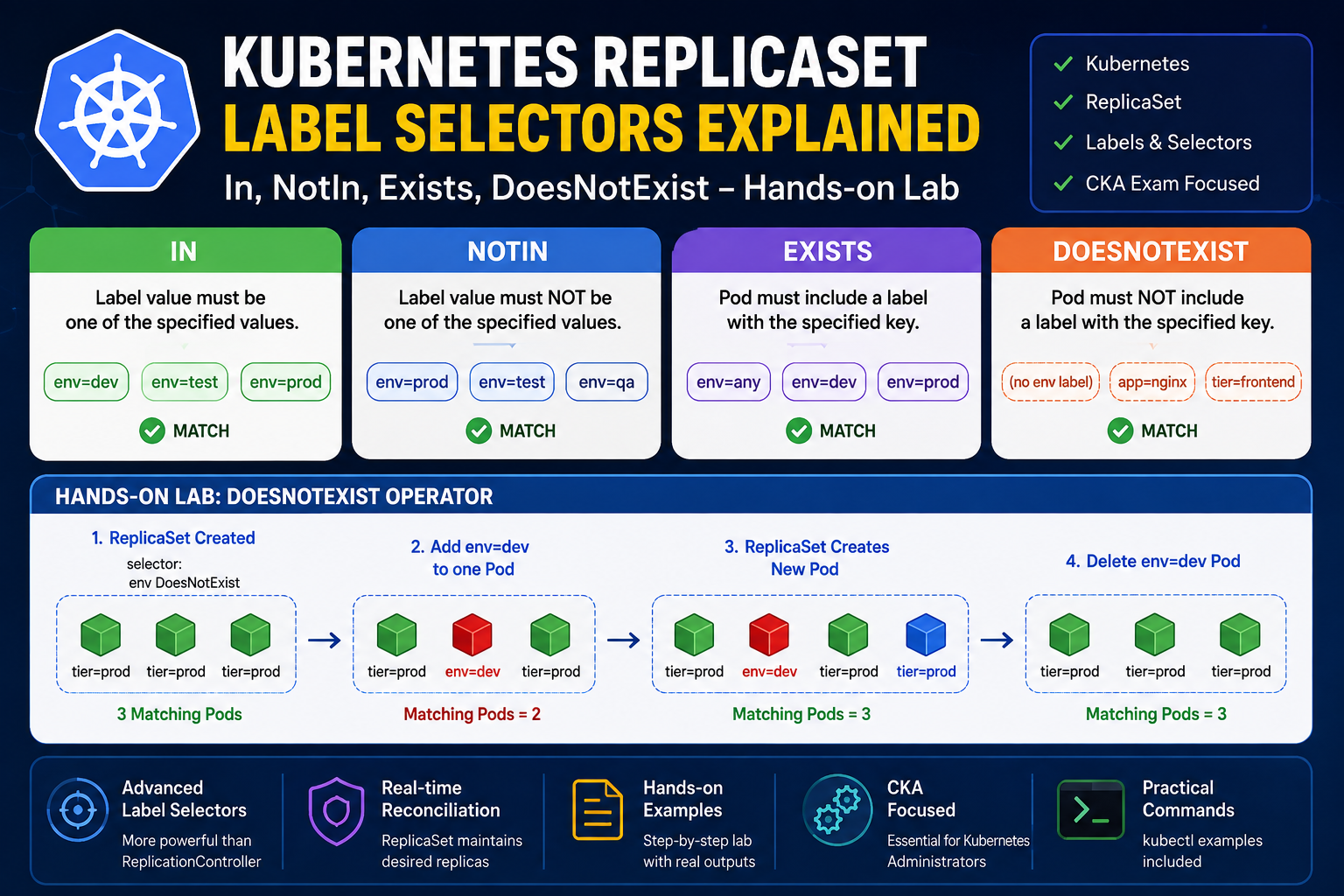
Category: Kubernetes, CKA, ReplicaSet, Labels, Selectors Introduction One of the biggest improvements of ReplicaSet over the old ReplicationController is its more expressive label selectors. ReplicationController supports only simple equality-based selectors such as: ReplicaSet introduces set-based selectors, allowing you to create much more flexible selection rules using matchExpressions. In this hands-on lab, we’ll explore all four ReplicaSet selector operators: We’ll also verify each operator by changing Pod labels and observing ReplicaSet’s
Tag: Kubernetes Labels
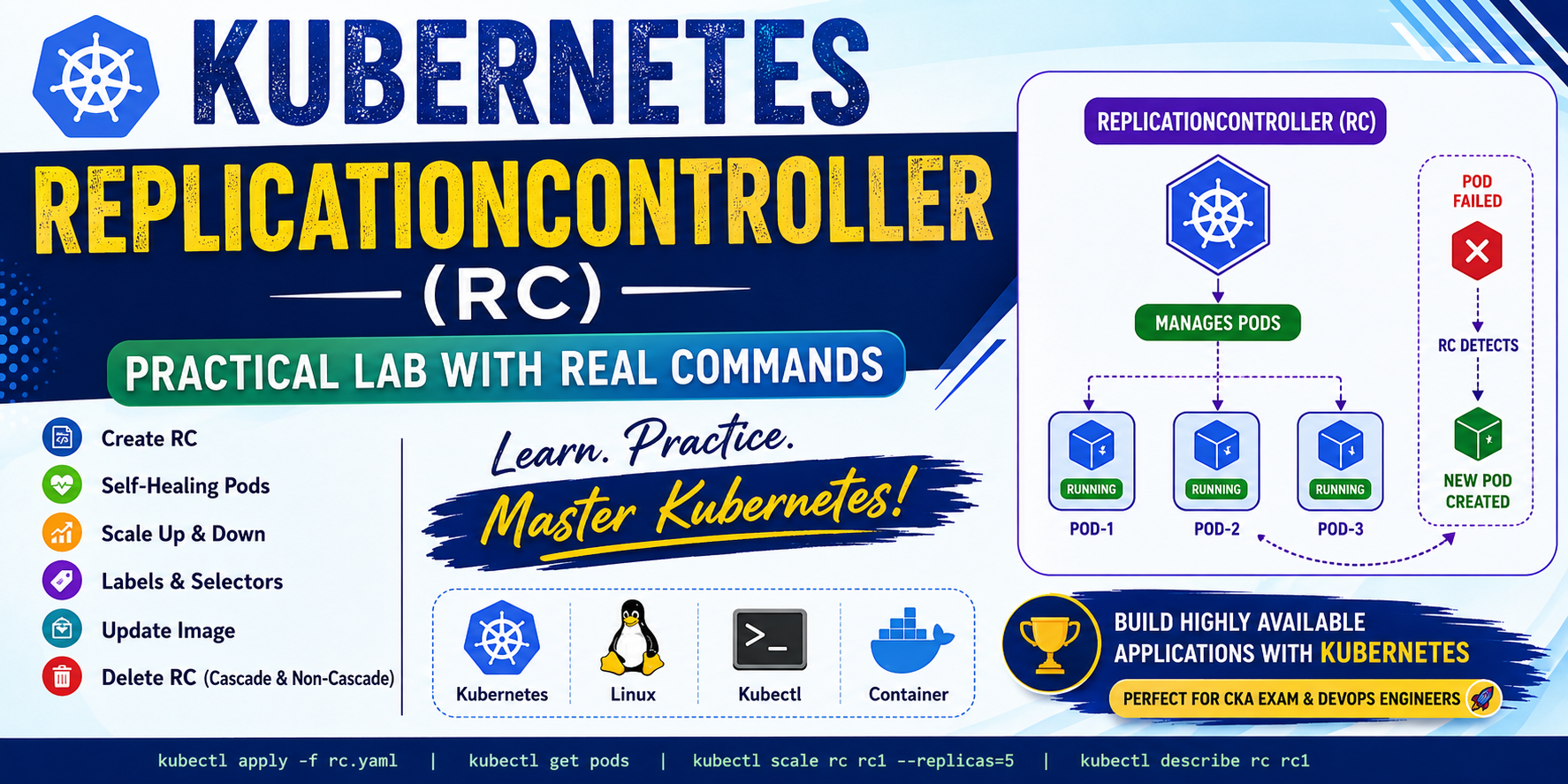
In this blog, I will demonstrate: What is ReplicationController? A ReplicationController (RC) ensures that a specified number of Pod replicas are always running. If a Pod crashes or is deleted accidentally, Kubernetes automatically creates another Pod. Responsibilities Lab-1: Create a Single Pod Create an nginx Pod. Output Check the Pod. Output Delete the Pod Output Check again. Output Notice that Kubernetes does not recreate the Pod because it is an
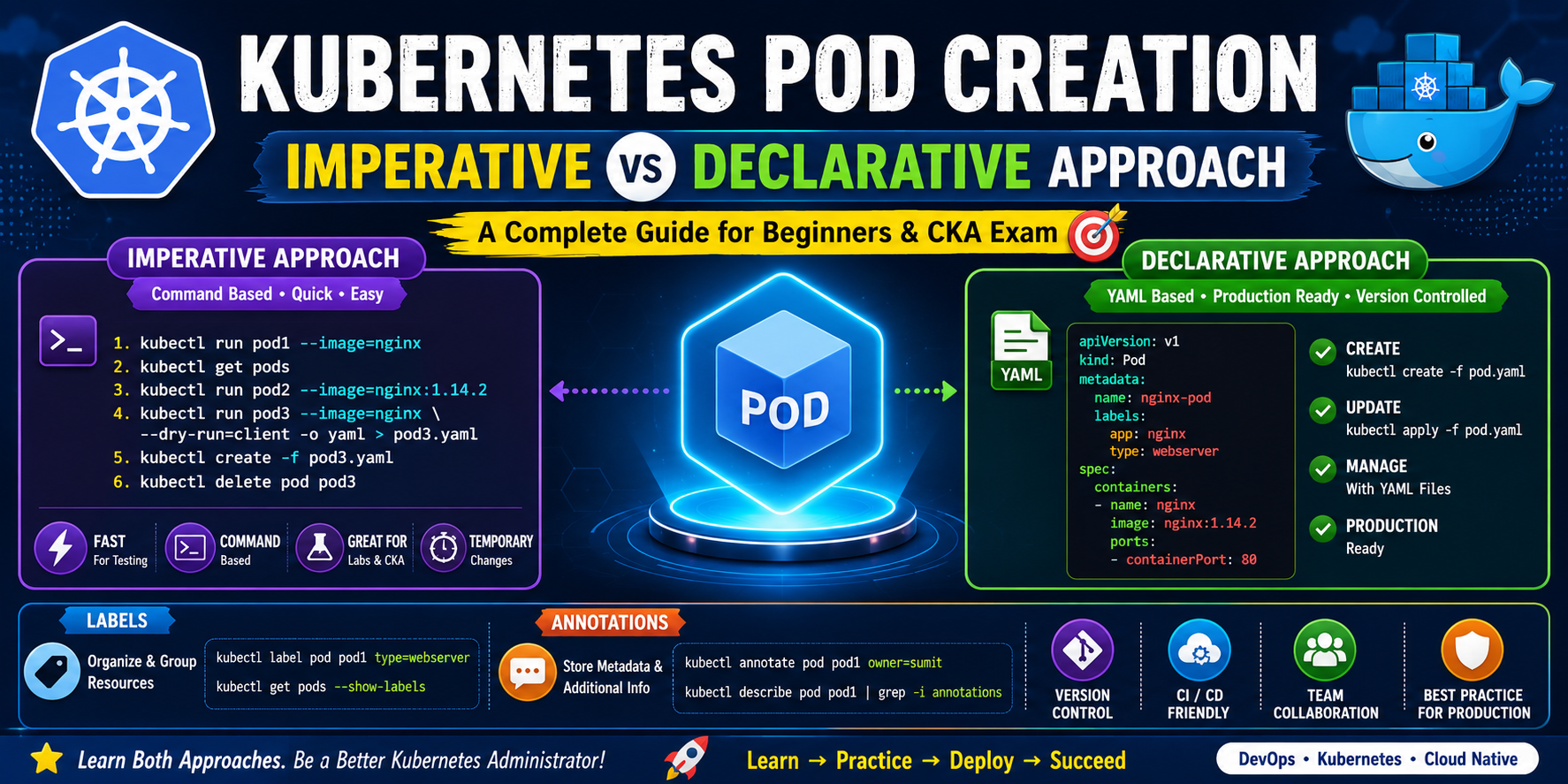
Level: Beginner → IntermediateCategory: Kubernetes | DevOps | CKA | DockerAuthor: Sumit Bera 📚 Introduction Kubernetes is an open-source container orchestration platform that automates the deployment, scaling, and management of containerized applications. Before learning Deployments, Services, ReplicaSets, or Ingress, you should first understand Pods, because every application in Kubernetes runs inside a Pod. There are two methods to create Kubernetes resources: Every Kubernetes Administrator should know both methods because they